

- by Jorge Mckechnie
- Massage Benefits, Massage Techniques, Massage Therapies, Massage treatments
- 0 Comments
If you’ve never experienced a Swedish full body massage before, it’s completely natural to wonder what actually happens once you get on the table.
There are plenty of people who think that a massage is just an hour of relaxation, and sure, relaxation is part of it. But a good Swedish massage therapy session is much more purposeful than that. It’s designed to help the body relax, improve circulation, relieve general tension, and give your nervous system a real rest.
This is what I see all the time at Cielo Spa & Wellness in Philadelphia. Clients come in feeling tight, overworked, and overloaded mentally. They leave feeling lighter, calmer, and connected to their own body again.
That’s the power of a good Swedish massage for relaxation. It’s steady, soothing, and astonishingly effective.
What a Swedish full body massage actually is
Swedish full body massage is a smooth, flowing pressure massage designed to relax the muscles and help the body as a whole. Most sessions involve long strokes, kneading, rhythmic movement, and gentle pressure with oil or lotion. This is why many people also call it a Swedish oil massage.
This is why many people looking for a relaxing Swedish massage often choose this style first. It’s approachable, comforting, easy on the body, and still has real benefits.
Here’s something that might surprise you: Of all the newer, trendier massage styles out there, Swedish massage therapy is still the single most requested treatment in the entire industry. Swedish massage is the most booked type of massage worldwide, taking 34.6% of all massage appointments, according to recent market research. It is the most popular service globally in spas, salons, and wellness centers. In fact, the global massage therapy market is expected to grow from approximately $20.8 billion in 2025 to over $41 billion by 2035—with Swedish massage at the heart of that growth.
That tells you a lot about the place of massage today. It’s not just about pampering – people are booking. They’re booking for stress relief, for recovery and for long-term self-care.
What Actually Happens When You Book a Swedish Massage
Before your session, we will have a quick chat. What are the areas of tension or injury, or the spots you’d rather I avoid? This is also where you will tell me how comfortable you are with undressing. You will always be covered by a sheet or towel during the entire session, and only the area being worked on will be exposed. If you’d like to keep some clothes on, that’s fine too.
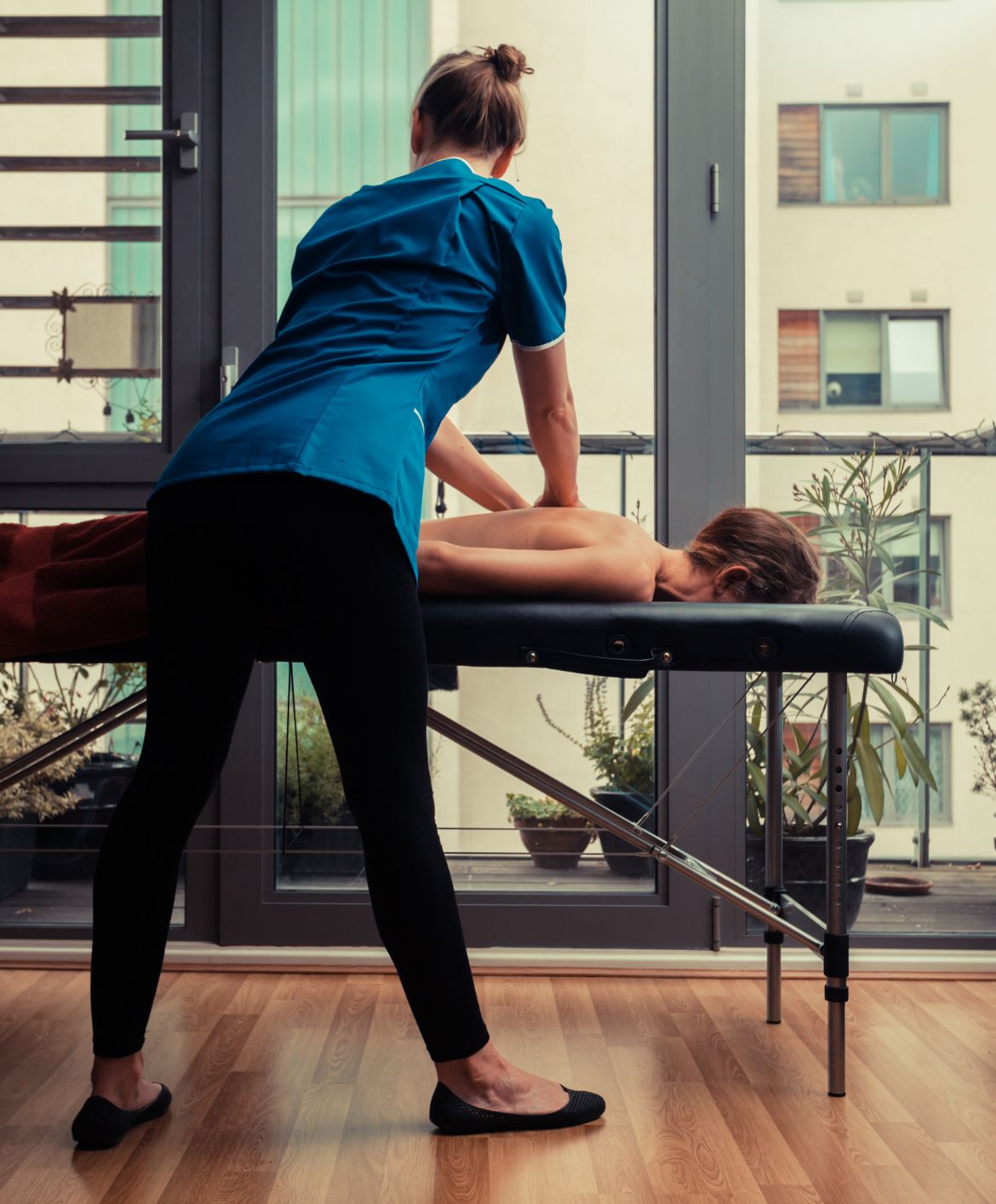
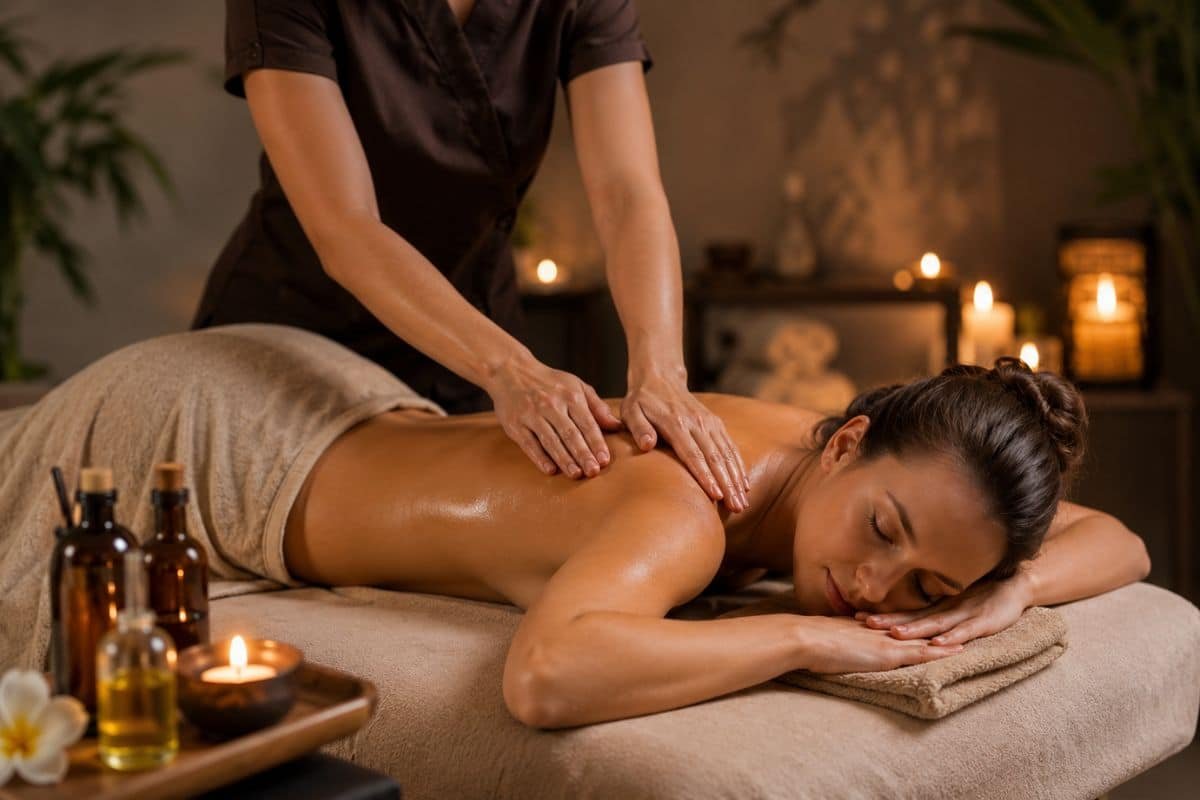
During the massage, you’ll be lying comfortably on a heated table in a quiet, calming room. I generally start with the back and shoulders, as that is where most people hold their tension, then move on to the neck, arms, hands, legs and feet. I use long, flowing strokes with warm massage oil to reduce friction on the skin, plus kneading, light tapping and gentle circular movements. That light to medium pressure stays in the sweet spot — firm enough to work through tension, but gentle enough to feel deeply relaxing rather than painful. And you’re free to speak up at any time in the session if you want the pressure adjusted up or down.
A full Swedish massage session typically lasts between 60 and 120 minutes, giving you plenty of time to work through the whole body and not just rush through it.
The Five Techniques That Make Swedish Massage Work
First, you have effleurage, those long, smooth, gliding strokes that heat your muscles. This is also when I can gauge just how tense or relaxed your tissue actually is. This also bookends the massage at the end, letting your body know that the session is coming to a close.
Petrissage is the deeper, kneading work. It is rhythmic compression, elevation, and rolling of your muscle tissue. This technique is actually the longest part of the session as it is what really gets tight muscles loose and blood moving into the area.
Tapotement is a sequence of rhythmic tapping or light drumming movements. It sounds odd if you’ve never tried it, but it’s surprisingly good at getting the blood moving and waking up sleepy muscle tissue.
Friction applies circular or linear pressure with the thumbs or fingers to work through adhesions and realign the underlying tissue. This is often the point where clients feel the most obvious release of accumulated tension.
Finally, vibration adds subtle shaking movements to help loosen muscles more and relax the nervous system before the session concludes.
Together, these five techniques make up what makes Swedish oil massage so uniquely effective. It’s a designed sequence to warm, loosen, and relax your entire body systematically.
The benefits people notice most
The benefits go beyond just “feeling relaxed.”
Here is what many clients notice:
- They breathe more deeply.
- Their shoulders stop hovering around their ears.
- Their mind slows down.
- They sleep better that night.
- They feel less physically tight the next morning.
A good session can also improve blood flow, help muscles recover from everyday strain, and make movement easier. That’s why this style is such an integral part of modern-day wellness.
And in a world of people rushing, sitting, scrolling, and stressing all the time, a session that allows the body to finally breathe is no small thing.
Swedish vs. Deep Tissue: Which One Do You Actually Need?
Swedish Massage is designed to be relaxing, improving circulation and relieving general tension with lighter, flowing pressure. Deep tissue massage uses many of the same core methods but uses a lot more pressure, working on deeper muscles to deal with chronic pain, old injuries, or bad muscle tightness.
If your main reason for needing massage is to de-stress, increase circulation, or relieve general day-to-day tension, therapeutic Swedish massage probably is just what you need. If you’re recovering from a particular injury or have chronic pain that’s been around a long time, we might suggest deep tissue, or even a mix of the two in the same session.
What to Expect After Your Session
When your massage is over, don’t be surprised if you’re feeling deeply relaxed, or even a little sleepy. This is totally normal and in fact a good sign that your body hit that restorative state we’re looking for. I always recommend drinking lots of water afterwards to help flush out any metabolic waste that gets released during the massage, and taking a little time before jumping back into a hectic schedule if you can manage it.
You can also expect to feel some mild soreness in the day or two after your session, especially if we worked through particularly tense areas. This usually clears up on its own quite quickly, and drinking plenty of fluids will help this along.
Why More People Are Choosing Massage as Routine Care
Industry research reveals that 79% of people who recently had a massage did so for health, wellness, or stress-reduction reasons, rather than as an occasional indulgence. And 91% of respondents believe massage is good for their overall health and well-being. More and more people are seeing massage as a necessity to keep their health on track, along with exercise and sleep, and less of a luxury splurge.
Ready to Experience It for Yourself?
Whether it’s your first time getting a massage or you’re a long-time customer booking your next appointment, we at Cielo Spa & Wellness want to make sure your Swedish massage experience is comfortable, customized, and truly restorative from start to finish. Book your Swedish massage now!
Frequently Asked Questions
What happens during a Swedish full body massage?
You'll lie on a comfortable, heated table while fully covered with a sheet or towel, with only the area being worked on exposed at any time. Your therapist uses massage oil and applies long, flowing strokes combined with kneading, gentle tapping, and light circular pressure, typically working from the back and shoulders through the neck, arms, legs, and feet over 60 to 120 minutes.
Do you keep your clothes on during a Swedish massage?
You undress to your own comfort level. Many people remove all clothing, while others prefer to keep underwear on. Either way, you'll always be draped with a sheet, with only the specific area being massaged ever exposed. Your therapist will never fully uncover your body at any point.
What are the main techniques used in Swedish massage?
Swedish massage relies on five core techniques: effleurage (long gliding strokes), petrissage (deeper kneading), tapotement (rhythmic tapping), friction (circular pressure to release adhesions), and vibration (gentle shaking motions). Together, these techniques warm, loosen, and relax muscle tissue throughout the entire body.
What are the benefits of Swedish massage?
Benefits include improved blood circulation, reduced muscle tension and stiffness, better lymphatic drainage, increased flexibility, and pain relief for conditions like chronic tension and lower back pain. Mentally, it lowers cortisol levels while boosting serotonin and dopamine, supporting better mood, reduced anxiety, and improved sleep quality.
Can Swedish massage help with lower back pain?
Yes. Swedish massage techniques improve circulation and ease tension in both the muscles and surrounding fascia of the lower back, which can provide meaningful relief for general tension-related back pain. For more severe or chronic pain, it's often combined with deep tissue techniques for a more targeted approach.
What's the difference between Swedish massage and deep tissue massage?
Swedish massage uses lighter to medium pressure focused primarily on relaxation, improved circulation, and general tension relief. Deep tissue massage applies significantly firmer, more targeted pressure to reach deeper muscle layers, making it better suited for chronic pain, injury recovery, or deeply embedded muscle tightness.
Will I feel sore after a Swedish massage?
Mild soreness in the day or two following your session is normal, especially in areas that held significant tension. This typically resolves quickly on its own, and staying well-hydrated afterward helps your body flush out the metabolic waste released during the massage.
How long does a Swedish massage session usually last?
Most full-body Swedish massage sessions run between 60 and 120 minutes, giving your therapist enough time to thoroughly work through the back, shoulders, neck, arms, legs, and feet without rushing.
Book your massage appointment with Jorge McKechnie today.